
Why Rice Appearance Matters
In today’s rice market, appearance equals value.
Export buyers and consumers judge rice quality not only by taste but also by surface brightness, cleanliness, and texture.
That’s why many modern rice mills are upgrading to Water Mist Polishing Machines — the key technology for producing high-grade, glossy white rice.
What Is a Rice Water Mist Polishing Machine?
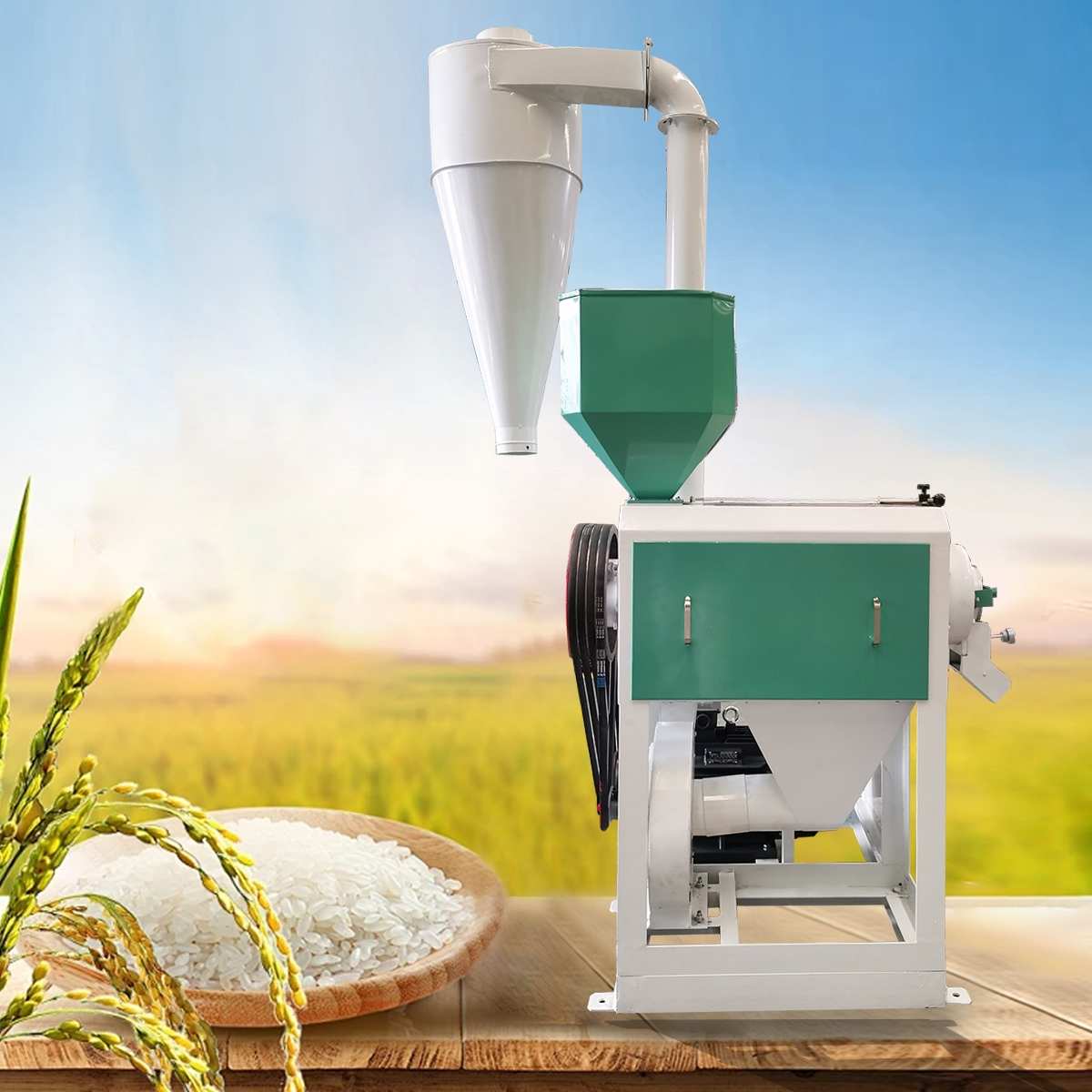
A Water Mist Rice Polisher gently sprays an ultra-fine mist of water during the polishing process.
This controlled micro-hydration removes fine bran residues, smooths the grain surface, and gives the rice a natural, silky shine — without soaking or damaging the grain.
Unlike traditional dry polishers, which rely only on friction, the water mist method:
Reduces heat generation
Prevents cracked or broken grains
Enhances whiteness and transparency
Working Principle of Water Mist Polishing
Feeding: Clean, whitened rice enters the polishing chamber.
Water Mist Spraying: A precision nozzle injects a fine water mist (only 0.1–0.3% of total rice weight).
Friction Polishing: Rice grains rub against each other and the roller, removing micro-bran layers.
Air Drying: Moisture is instantly evaporated by warm airflow.
Output: Bright, glossy rice with smooth surface and longer shelf life.
This process is completely automatic and does not make the rice “wet” — the mist is so fine it’s nearly invisible.
Technical Features
| Feature | Description |
|---|---|
| Polishing Chamber | Stainless steel with wear-resistant coating |
| Water Supply System | Precision atomizing nozzle (0.1–0.3% water ratio) |
| Temperature Control | Prevents overheating during polishing |
| Air Separation System | Removes bran dust efficiently |
| Output Capacity | 1–6 tons/hour depending on model |
| Automation Level | PLC + touch screen operation (English available) |
Advantages of Using Water Mist Polishing Machines
✅ Improved Rice Brightness: Achieves export-grade shine without chemical coating.
✅ Lower Broken Rate: Gentle polishing minimizes kernel damage.
✅ Cleaner Product: Removes bran dust and micro impurities.
✅ Energy Saving: Less friction heat, reduced power consumption.
✅ Better Storage Stability: Smooth rice surface reduces oxidation.
✅ Environment Friendly: Uses minimal water and no chemical additives.
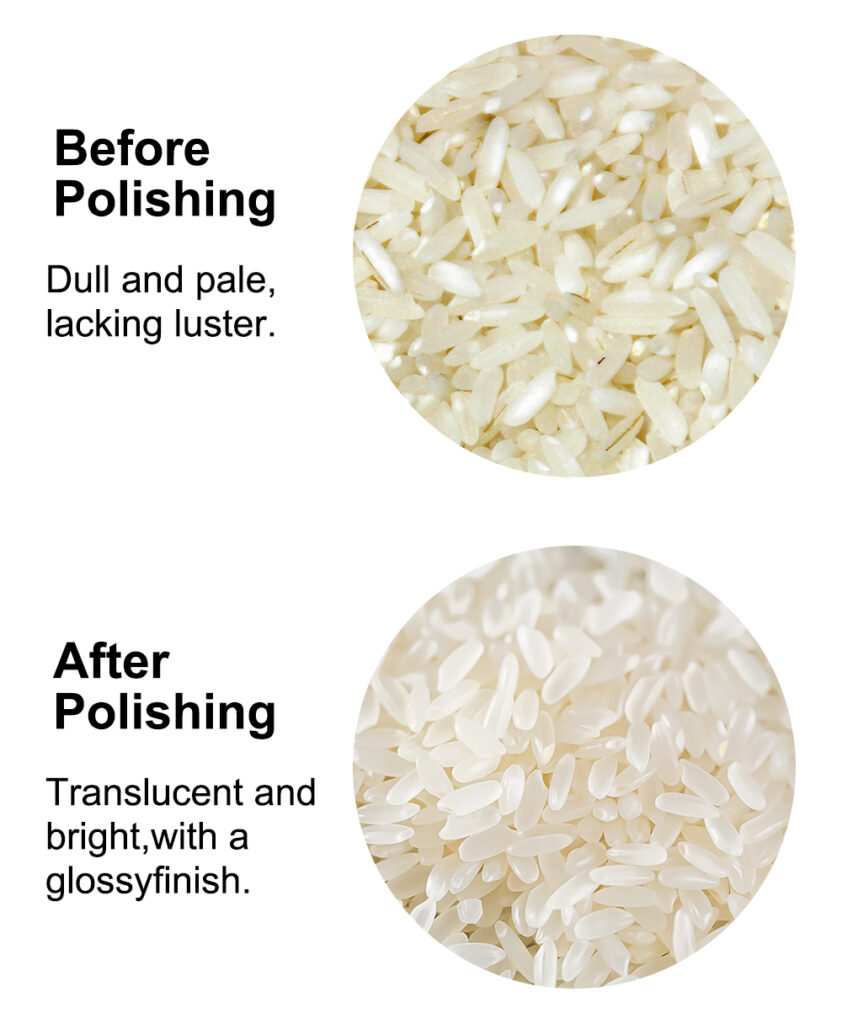
Comparison: Traditional vs. Water Mist Polishing
| Aspect | Traditional Dry Polishing | Water Mist Polishing |
|---|---|---|
| Rice Brightness | Moderate | High, glossy finish |
| Broken Rice Ratio | 4–6% | 2–3% |
| Temperature Rise | High (friction heat) | Low (water-cooled) |
| Dust Emission | High | Very low |
| Water Usage | None | Minimal (0.1–0.3%) |
| Energy Efficiency | Average | 10–15% energy saving |
Engineering Insights
The polishing roller inside the machine is made of abrasion-resistant alloy, ensuring stable performance for thousands of hours.
The atomized water nozzle is precision-engineered to control droplet size under 0.05mm, achieving the “invisible mist” effect.
Advanced models also include:
Automatic moisture adjustment
Intelligent temperature compensation
Real-time monitoring system
These ensure consistent polishing quality across different rice varieties and humidity conditions.
Market Application
Water mist polishers are now widely used in:
Commercial rice milling plants
Export rice packaging factories
Agricultural cooperatives
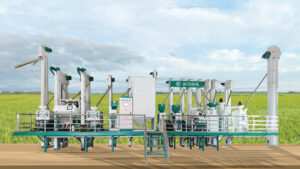
Modern smart rice processing lines
They are especially popular in Southeast Asia, South America, and Africa, where customers demand premium-quality, bright white rice for export.
The Water Mist Rice Polishing Machine represents the future of rice finishing technology.
By adopting micro water polishing, rice mills can produce brighter, cleaner, and higher-value rice, reduce energy loss, and enhance market competitiveness.
Investing in water mist technology is not just about appearance — it’s about quality, efficiency, and long-term profit.